-

Hegel Synthesized Aristotle and Kant
Hegel is usually presented as the great successor to Kant and one of the central figures of German Idealism. That is true, but it only explains part of his philosophical project. Hegel also drew heavily from Aristotle, particularly his ideas of actuality, form, teleology, and the intelligibility of reality. In…
-
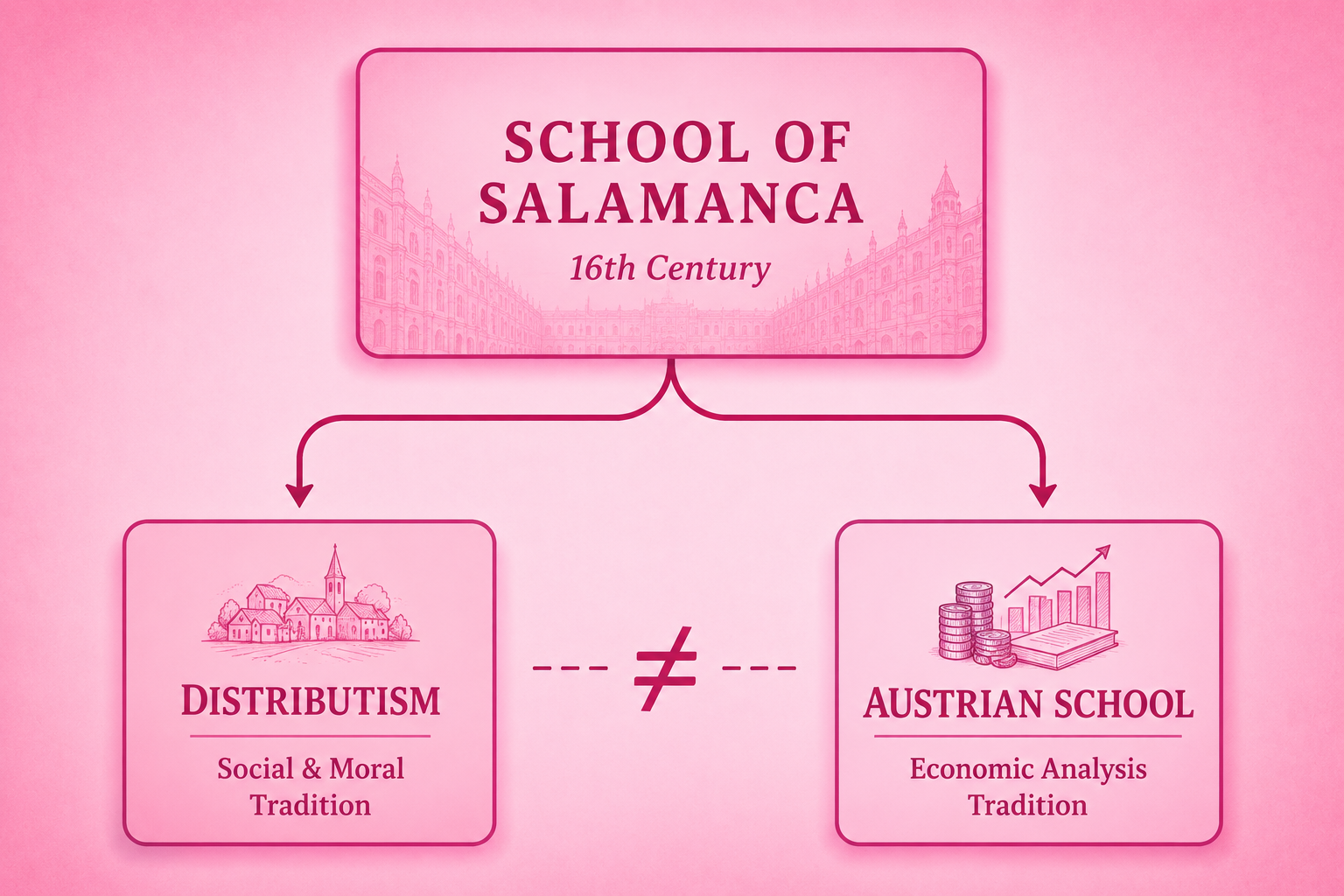
Two Roads from Salamanca
Distributism and Austrian economics share an intellectual source in the School of Salamanca, but they do not belong to the same lineage. The Salamancans combined Aristotelian-Thomistic natural law with sophisticated analyses of private property, prices, money, scarcity, and exchange. Because their thought contained both a moral philosophy of economic life…
-

Spengler, Michéa, and Konkin: Three Critiques of Liberal Civilization
Although they came from very different intellectual traditions, Oswald Spengler, Jean-Claude Michéa, and Samuel Edward Konkin III converge on a striking insight: state capitalism and state socialism are not genuine opposites but products of the same liberal civilization. For Spengler, both liberal capitalism and Marxism belong to the same English…
-
Introduction to Politics Beyond the Compass
Being “transcendental” on the political compass means operating outside its usual categories. The term has nothing to do with metaphysics, theology or spirituality. It is used only as a political label for a perspective that rejects the standard divisions between left and right, authoritarian and libertarian. The political compass assumes…
-
Introduction to Renewal Libertarianism
Samuel Edward Konkin III had a naming problem that he could hardly have anticipated. During the early 1970s, while breaking intellectually and strategically with the emerging Libertarian Party, he began developing what he called New Libertarianism. Counter-Economics supplied its method, agorism its destination, and the rejection of electoral politics its…
-

Introduction to Anarcho-Panarchy
Imagine four neighbours living on the same street. One is an individualist anarchist, one is a mutualist, one is an anarcho-capitalist, and the fourth is an anarcho-distributist. They share the same physical space, but they disagree about property, credit, firms, exchange, and economic organization. The individualist anarchist prefers personal autonomy…
-

Introduction to Bright Endarkenment
Modern political philosophy is commonly understood as a debate within the intellectual legacy of the Enlightenment. Liberalism, socialism, constitutional democracy, secular humanism, positivism, and many forms of modern conservatism define themselves in relation to the transformation that began in seventeenth- and eighteenth-century Europe. More recently, another current has emerged in…
-
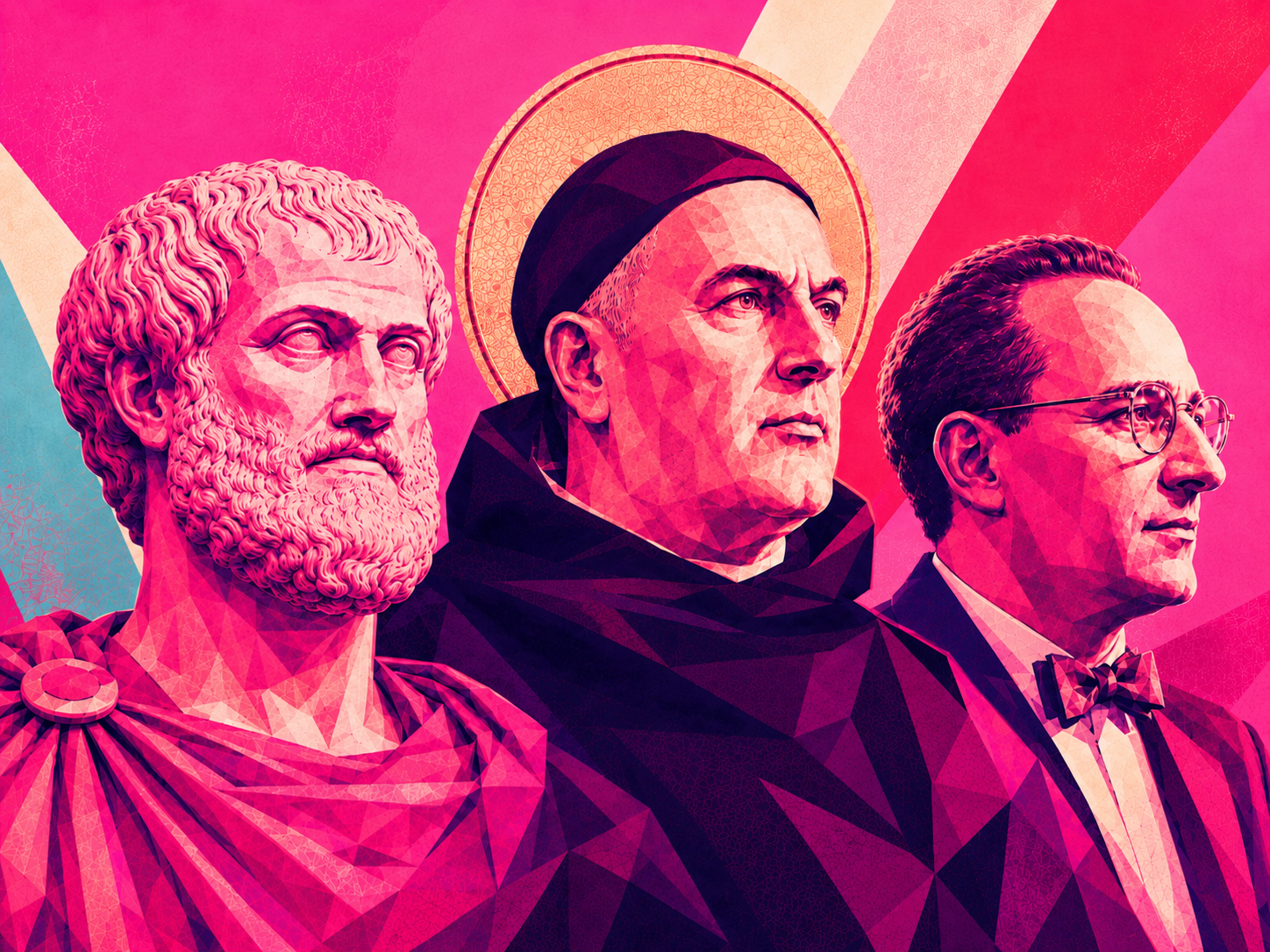
More on Did Ayn Rand Introduce Murray Rothbard to Aristotle?
In my previous article, I argued that Ayn Rand did not introduce Murray Rothbard to Aristotle. The evidence shows something more nuanced: Rand had a real influence on Rothbard’s appreciation of natural rights and natural law, but there is no convincing evidence that she was the original source of his…
-
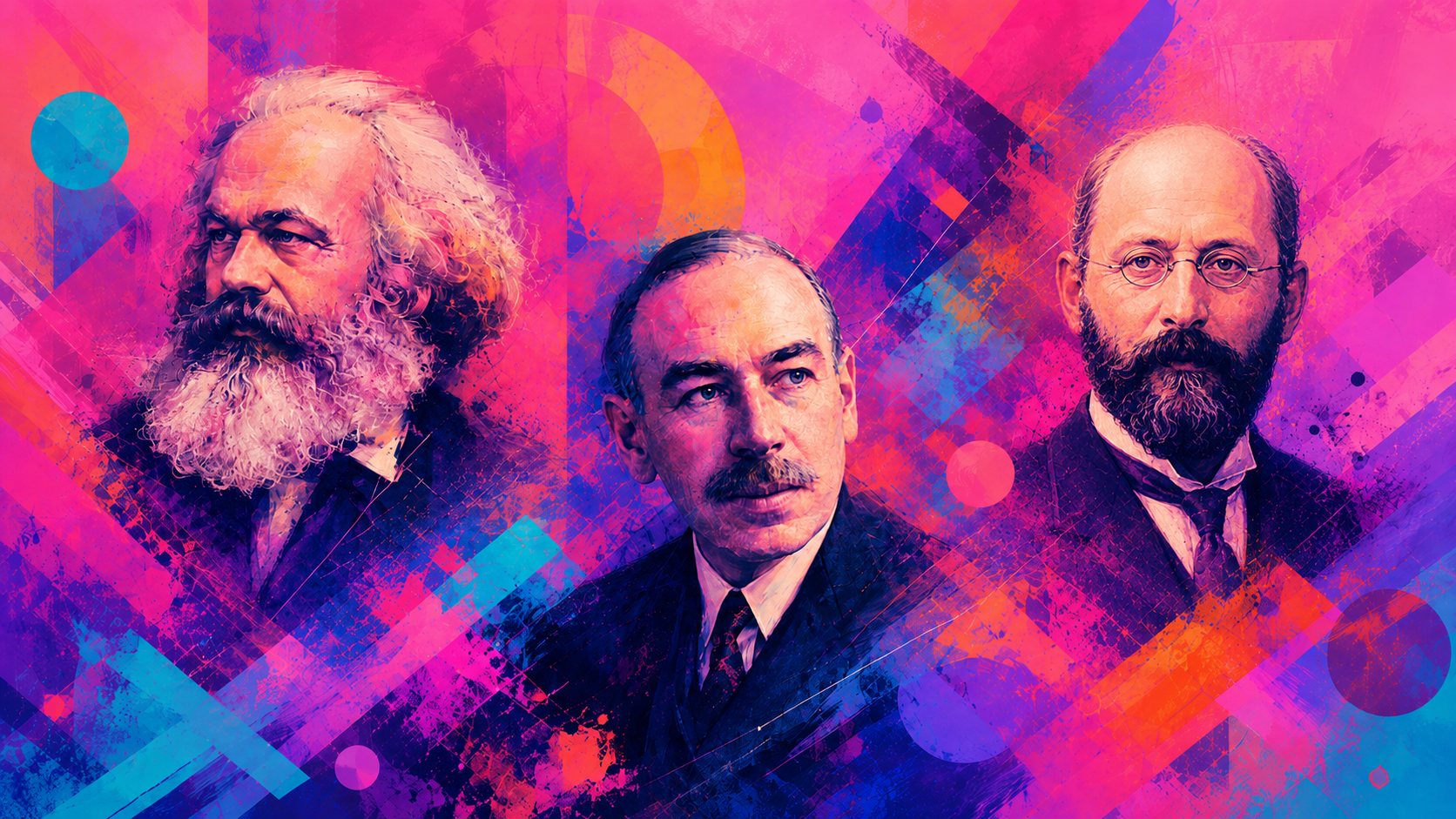
From Marx to Keynes: How Social Democracy Became the Ideology of the Administrative State
Modern social democracy is usually presented as a moderate alternative to both laissez-faire capitalism and revolutionary socialism. It is described as pragmatic, democratic, humane, and technically responsible. Historically, however, it did not appear out of nowhere. It emerged from the broader socialist movement that also produced Marxism, before gradually exchanging…
-

Against Community as Authority
From an early Proudhonian point of view, not the later Proudhon of federalism, community is not something to worship, romanticize, or dissolve the individual into. It is something to treat with suspicion whenever it becomes coercive, moralizing, collectivist, or even when it appears voluntary but begins to generate a collective…

Philippe
Lemieux
いい気分だわ!