
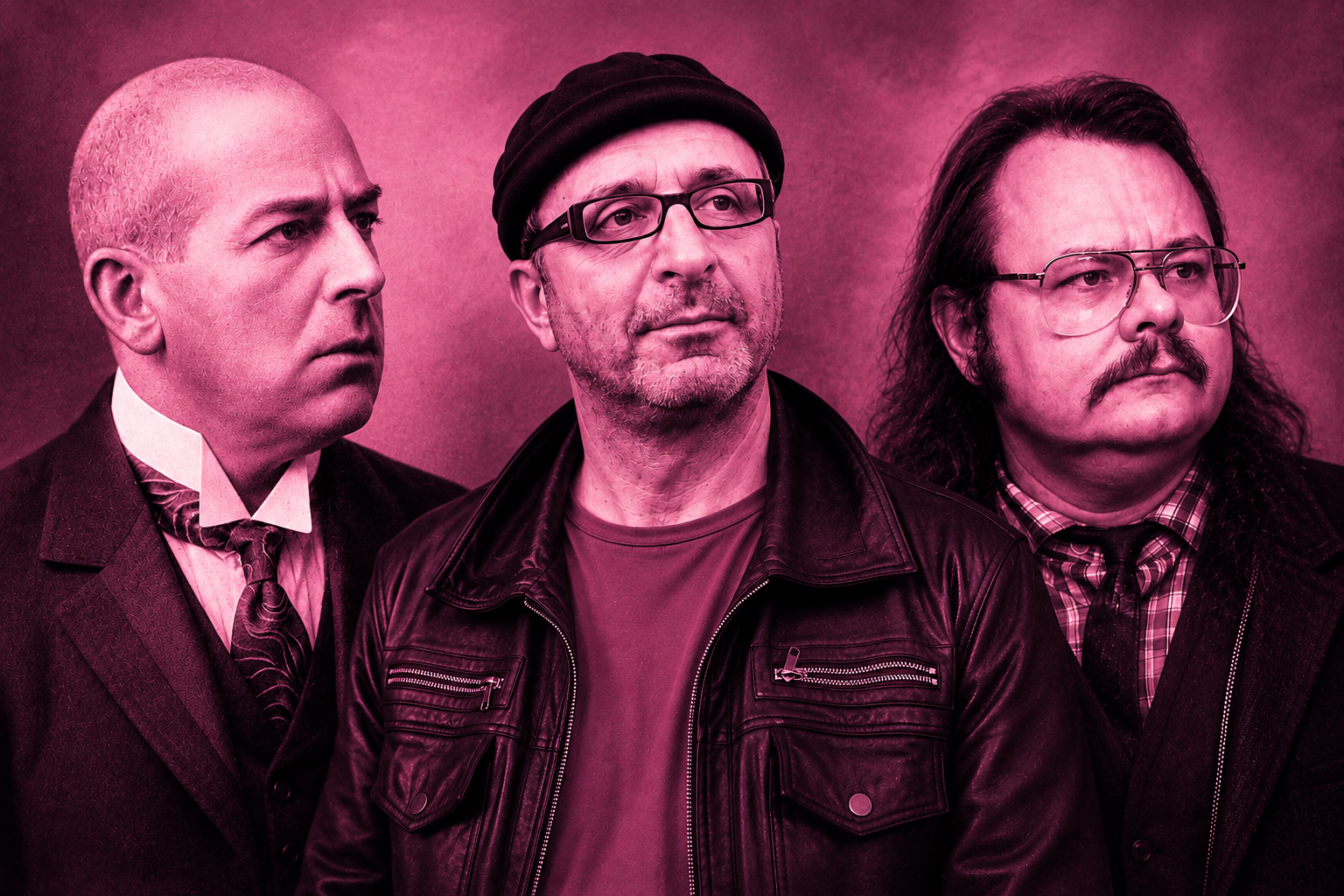
Although they came from very different intellectual traditions, Oswald Spengler, Jean-Claude Michéa, and Samuel Edward Konkin III converge on a striking insight: state capitalism and state socialism are not genuine opposites but products of the same liberal civilization.
For Spengler, both liberal capitalism and Marxism belong to the same English liberal tradition. Marx did not transcend capitalism; he merely inverted its logic. Spengler therefore described Marxism as “the capitalism of the working class.” In his view, both systems reduce history to economic forces, embrace a fundamentally materialist conception of man, and differ primarily over who should control production and wealth rather than over the nature of civilization itself.
Jean-Claude Michéa makes an important distinction between socialism and the modern Left. In L’Empire du moindre maland Impasse Adam Smith, he argues that the historical Left gradually abandoned its original socialist tradition after the Dreyfus Affair by allying itself with progressive liberalism. For Michéa, genuine socialism was originally rooted in working-class solidarity, mutual aid, and moral criticism of capitalism. The New Left, by contrast, increasingly embraced the liberal ideals of individual emancipation, limitless progress, and the continuous expansion of market society. Economic liberalism and cultural progressivism therefore became complementary rather than contradictory.
Samuel Edward Konkin III extended a similar critique within libertarianism. He distinguished the genuinely free market from state capitalism, understood as a system of political privilege and corporate power. Likewise, he distinguished agorism from both state socialism and state capitalism. Konkin also argued that much of what passed for left-libertarianism merely fused free-market economics with culturally progressive values inherited from the broader liberal tradition.
Taken together, these three thinkers suggest that many of the political conflicts of modernity occur within liberalism rather than against it. Spengler argues that Marxism and capitalism share the same materialist foundations. Michéa argues that the New Left has become a vehicle for liberalism rather than a continuation of authentic socialism. Konkin argues that both state capitalism and state socialism depend on political power rather than genuinely free exchange. Despite their differences, all three challenge the conventional Left-Right divide and encourage a deeper critique of liberal modernity itself.
Leave a Reply