-

The Core Incompatibility Between Ayn Rand’s Objectivism and Austrian Subjective Value Theory
First of all, happy New Year to all of you. One of the most persistent claims in libertarian and free-market circles is that Ayn Rand’s philosophy and Austrian economics are naturally compatible, even mutually reinforcing. The association is understandable: both defend capitalism, individualism, private property, and methodological individualism. Yet beneath…
-
Why the “Ontologically Empty” Critique of Austrian Value Theory Misses the Mark
Every few months, a viral tweet or blog post resurfaces claiming that the Austrian subjective theory of value is nothing more than “hippie relativism” or an “empty tautology.” The latest version, complete with a cartoon of Marx, Mises, and Hayek confusedly staring at a box labeled “VALUE?,” makes three core…
-

Property Rights Are Categorically Imperative
Property rights are not a social convenience or a negotiable preference. They are a categorically imperative foundation for any moral and functional human society. When individuals are free to own, create, trade, and defend the fruits of their labor, social cooperation becomes possible. When property rights collapse, so does trust,…
-

The State Will Collapse On Itself
The state always looks solid, but it survives by consuming more than it creates. It grows heavier, slower, and more dependent on force. Bureaucracy multiplies. Debt rises. Trust evaporates. The machine expands until it can no longer support its own weight. Collapse comes not from revolt but from exhaustion. People…
-

Monarchism Is a Hard Variant of Communism
There is a strange superstition among right-wing romantics.They look at monarchy through an Instagram filter.Crowns. Marble. Traditions.They imagine order and stability. But if you remove the gold and the myths, you see the truth: A monarchy is not the opposite of communism.It is communism concentrated in one man. People do…
-

The elitist individualist is a being of unsocial sociability
The elitist individualist lives among people but never inside them. He does not reject society but he refuses to be absorbed by it. This is the essence of unsocial sociability, a form of sociability without belonging. He observes, he interacts, he cooperates, he helps, yet nothing binds him. He rejects…
-

Elite Individualists and Discrimination
Collectivism is spiritual cancer. No matter how beautifully they package it (“community”, “solidarity”, “inclusion”), the goal never changes: crush the exceptional individual and drown him in the mediocrity of the herd. The second you refuse to conform, collectivists pull out the heavy artillery: shaming, guilt-tripping, “aren’t you ashamed?”, “you’re not…
-
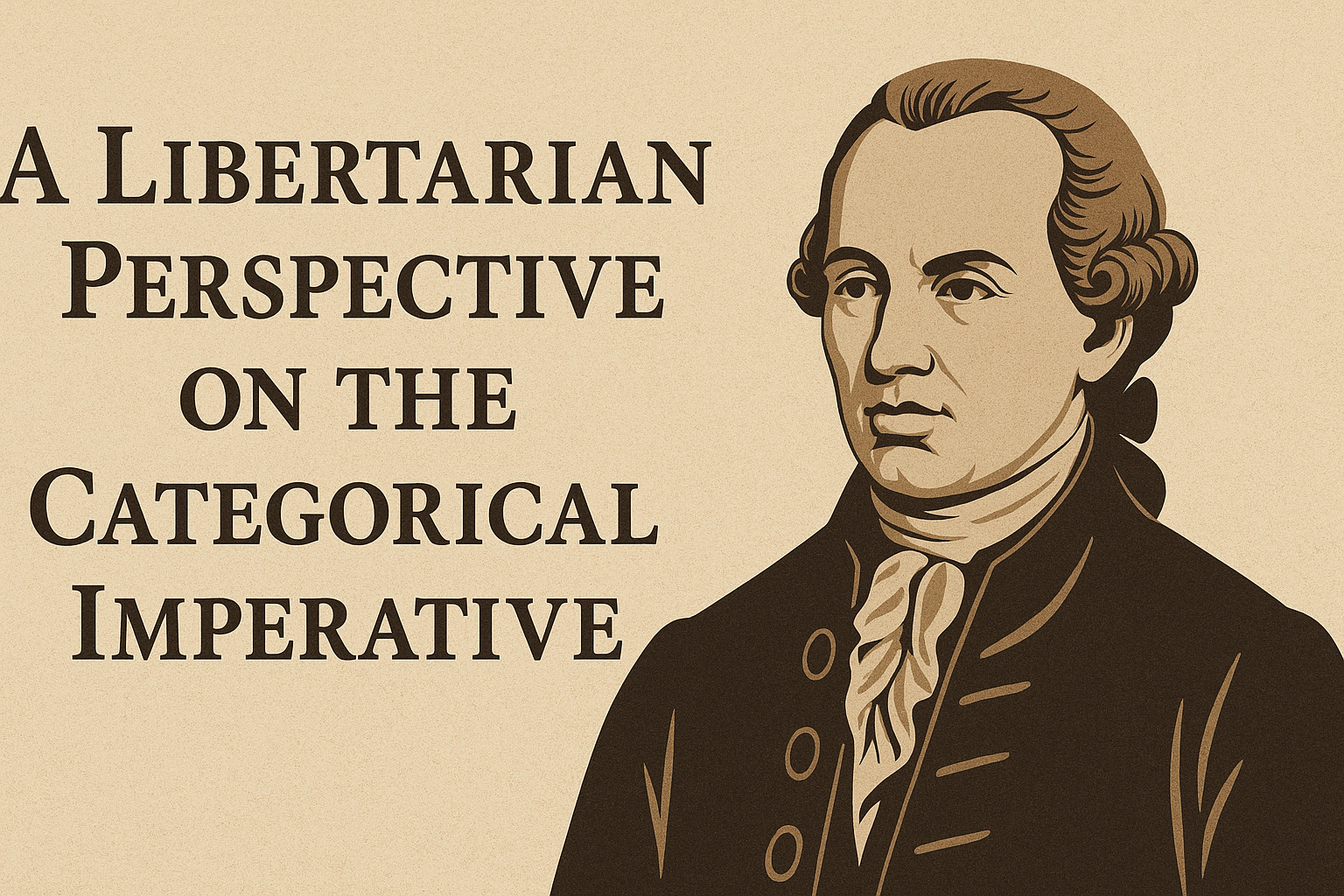
A Libertarian Perspective on the Categorical Imperative
A libertarian interpretation of Kant’s categorical imperative sees it as a deep moral foundation for individual liberty, non aggression and universal natural rights. 1. The Categorical Imperative as Universal Non Aggression Kant states that one must act only according to a maxim that one could will to become a universal…
-
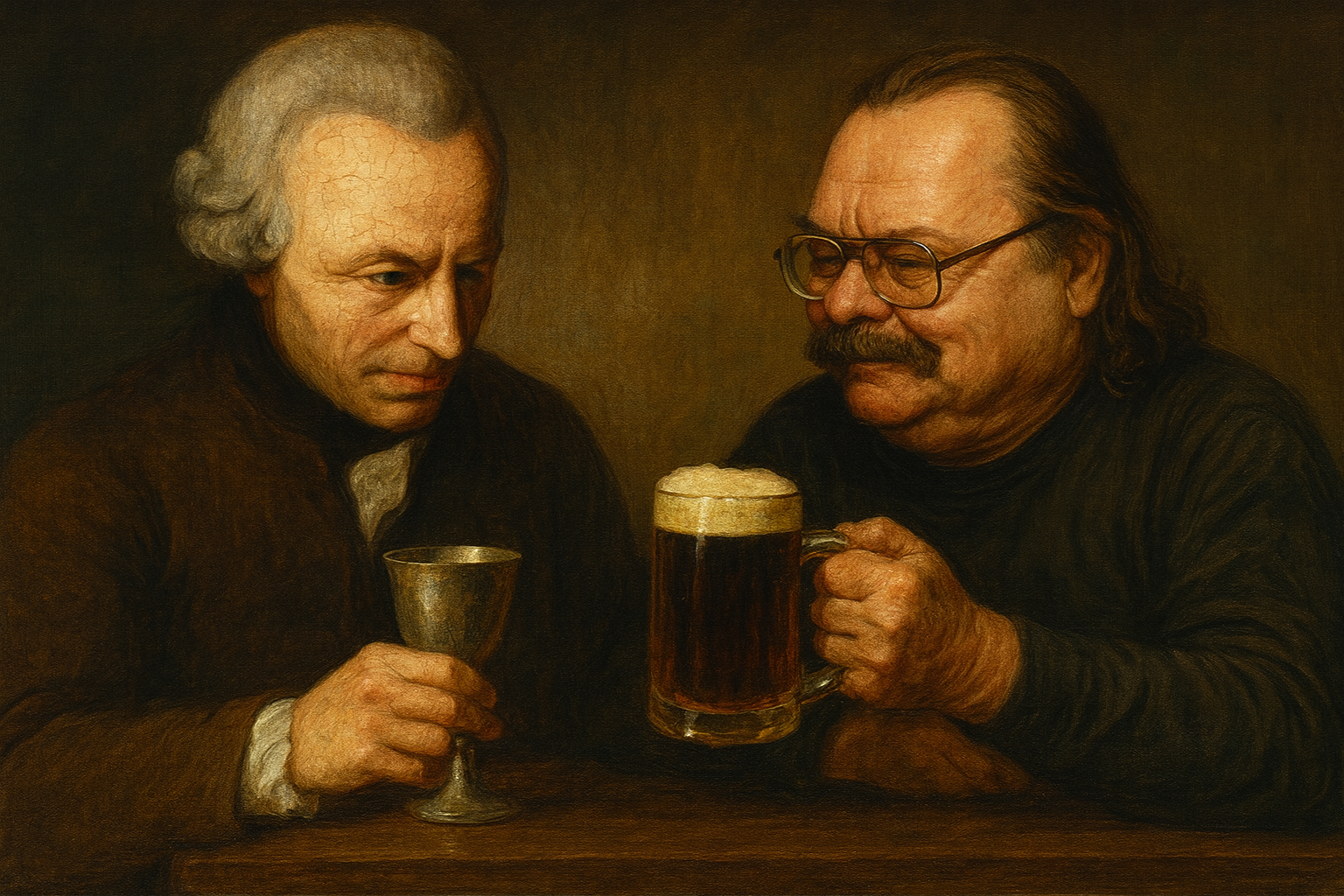
Counter-Economics Is an End and Not a Means
People often frame counter-economics as a tool, a means to weaken the State, a tactic to bypass bureaucracy, or a step toward some bigger objective. That reading is not just a strategic mistake, it is a philosophical one. If we return to Kant and if we take seriously the idea…
-

Agorism Is Evolution, Not Revolution
Agorism was never meant to play the game of revolutions. Revolutions belong to the State. Violence, confrontation, taking power, fighting for control. That is their world. Even Konkin used the word revolution, but honestly I think that was a mistake. The word carries too much Marxist weight. It brings the…

Philippe
Lemieux
いい気分だわ!