-

From Duty to Rights: The Great Transformation of Western Society
A common narrative of modern history tells us that humanity moved from a society of duties to a society of rights. While this description captures an important historical trend, it can be misleading if taken too literally. Human beings have always possessed natural rights. The real transformation was not the…
-

Hans-Hermann Hoppe and Kevin Carson: separated-at-birth philosophers.
Most libertarians would regard the comparison as absurd. Hans-Hermann Hoppe is the standard-bearer of uncompromising anarcho-capitalism, ironclad private property rights, covenant communities, and one of the most radical critiques of democracy ever written. Kevin Carson is the leading voice of mutualism, left-market anarchism, decentralized production, and a sustained critique of…
-

Market Capitalism, Market Socialism, and the Free Market
One of the greatest sources of confusion in modern political economy is the tendency to treat capitalism and markets as synonymous concepts. In everyday political discourse, supporters of capitalism are often described as supporters of markets, while critics of capitalism are frequently assumed to be critics of markets themselves. This…
-
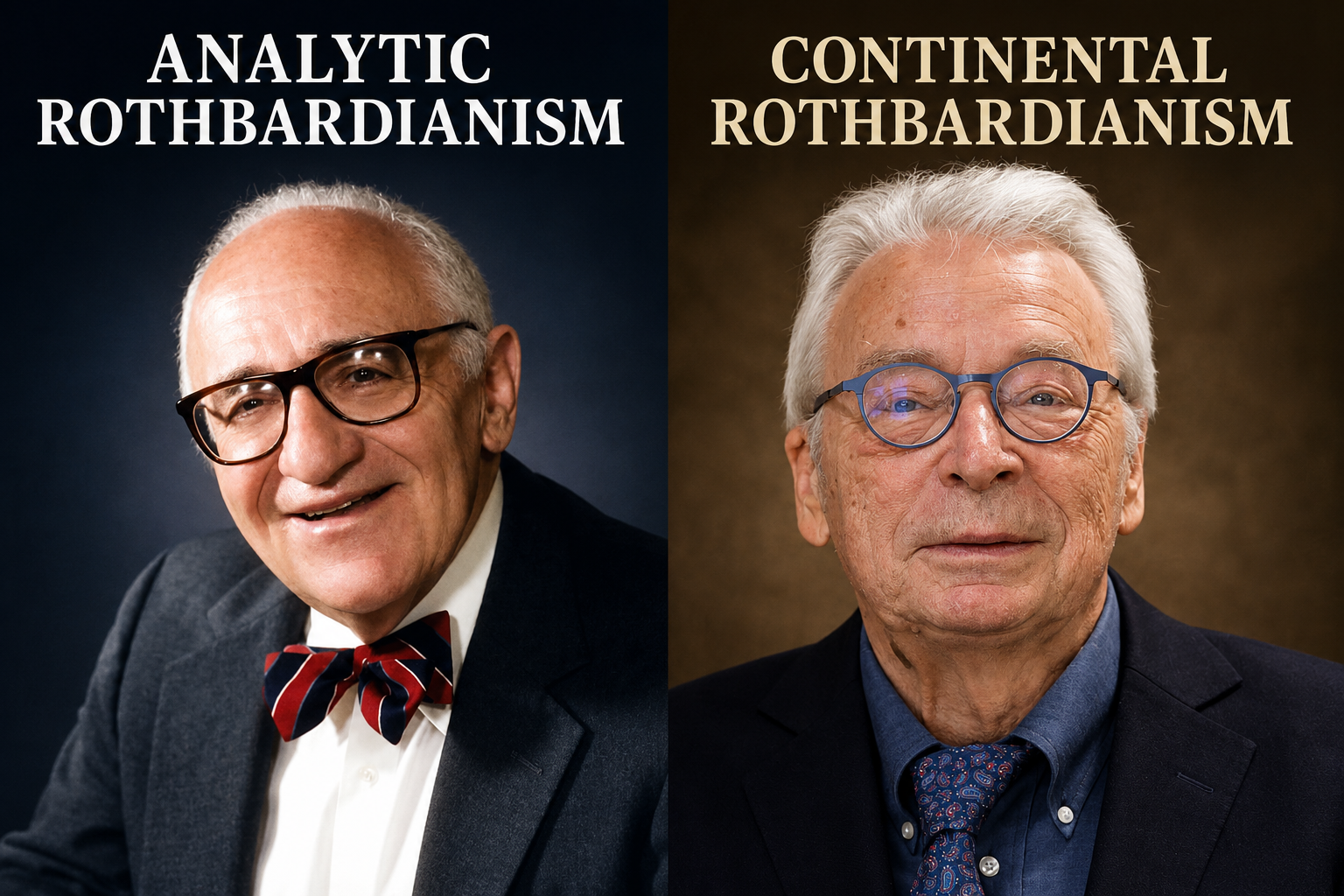
Analytic Rothbardianism and Continental Rothbardianism
For most of its history, the Austrian School remained fundamentally analytic in style. Even when its thinkers entered philosophy, ethics, sociology, or political theory, they generally approached these subjects through conceptual clarity, methodological individualism, rational deduction, and systematic analysis. Ludwig von Mises and Murray Rothbard are perhaps the clearest examples…
-
Synthesis, Platformism, and Anarcho-Capitalism: Rothbard Against Hoppe
Anarcho-capitalism remains a deeply unorthodox tendency in relation to the historical anarchist tradition. The debates between synthesis and platformism originally emerged within a movement that, historically, almost unanimously rejected capitalism, absentee property, and wage labor. Applying these categories directly to anarcho-capitalism therefore remains partly speculative. Nevertheless, one can still observe…
-

Agorism Against the Community
For Samuel Edward Konkin III (SEK3), the agora was never merely a marketplace. It was a revolutionary process. The agora is the zone where the counter-economy expands continuously against the State: black markets, grey markets, informal exchanges, parallel institutions, voluntary networks, and decentralized forms of production operating outside State control.…
-

Libertarianism as the Forgotten Left
The modern political spectrum rests on a confusion. The categories of “left” and “right,” repeated endlessly in media and public discourse, obscure more than they reveal. They group together traditions that are historically and philosophically incompatible, while separating others that share a common origin. To understand where libertarianism belongs, one…
-
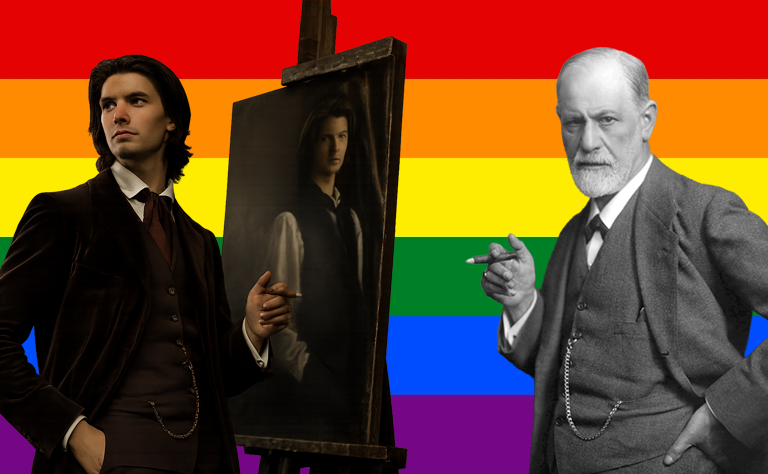
More on Narcissism, Hypergamy, and Sexual Difference (The Case of Dorian Grey)
The Picture of Dorian Gray is not merely a novel about decadence or Victorian morality. It operates as a near-perfect structural model for understanding what happens when narcissism becomes the organizing principle of human relations. Dorian does not behave as a conventional libertine. He acts as an agent whose ultimate…
-

Libertarian Eugenics
The word eugenics usually ends debate before it begins. It evokes forced sterilization, racial planning, and the worst crimes of the twentieth century. That reaction is understandable. But it also hides an important distinction. Not every attempt to influence heredity is the same. There is a world of difference between state coercion…
-
Why the Critique of Praxeology Matters But Does Not Refute Mises
I recently came across a critique of Austrian economics that, in my view, raises serious and valuable points, especially regarding the limits of praxeology. However, while the critique is insightful, it does not refute Austrian economics. On the contrary, it helps clarify what Mises actually did and did not claim.…

Philippe
Lemieux
いい気分だわ!