
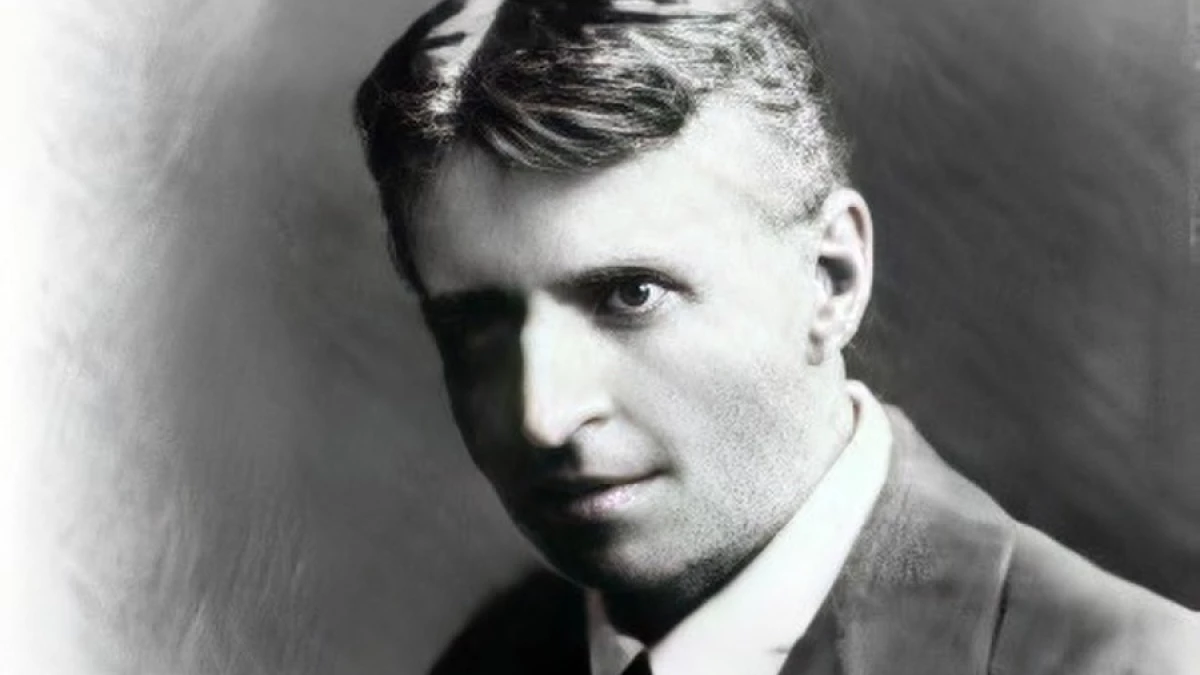
Otto Gross still matters because he saw what most political and economic theories ignore: that domination begins inside the psyche before it appears in institutions.
A contemporary of Sigmund Freud and an influence on early radicals, Otto Gross broke from orthodox psychoanalysis by rejecting its tendency to adapt individuals to society. Instead, he argued that society itself, structured around authority, repression, and patriarchal morality, was the real pathology.
For Gross, neurosis was not simply personal dysfunction. It was the internalization of domination. The obedient worker, the submissive citizen, the guilt-ridden individual, these were not healthy adaptations, but symptoms of a deeper social sickness.
This is where he still cuts deeper than most modern critiques.
Long before cultural theory and long before figures like Wilhelm Reich, Gross connected psychological repression with political control. He understood that authority persists not just through force, but through desire shaped to submit. You don’t need chains when people police themselves.
His anarchism was therefore not primarily economic or institutional, it was psychological. Liberation meant undoing internalized authority, breaking moral codes that exist only to reproduce obedience, dismantling guilt as a tool of control, and restoring instinct, desire, and individuality.
This makes him uniquely relevant today.
In a world of soft control, social pressure, algorithmic influence, identity norms, power rarely looks like open coercion. It looks like self-regulation. People enforce the system on themselves and others, often in the name of virtue.
Gross anticipated this. He saw that the most stable systems of control are those that become invisible, embedded in the psyche.
Where many stop at criticizing the state or capitalism, Gross forces a harder question: why do people accept domination in the first place?
Until that is answered, and undone, no external revolution is enough.
Otto Gross matters because he shifts the battlefield inward.
Leave a Reply