Jean Baudrillard matters because he explained, earlier than almost anyone else, that modern society no longer revolves around reality itself, but around signs, models, and simulations. He saw that the modern world was shifting away from direct experience and toward representation. What people consume, desire, and identify with is increasingly not the thing itself, but its image, its code, and its symbolic value.
His central insight is that signs can detach themselves from reality and begin to replace it. A product is no longer valued primarily for its use, but for what it signifies. A political system is no longer judged by truth, but by spectacle. A person is no longer measured by what he is, but by the image he projects. In that sense, Baudrillard is not just describing media. He is describing a civilization in which appearances become autonomous.
This is where his concept of simulation becomes decisive. Simulation is not simple imitation. It is the process by which representations cease to reflect reality and begin to generate a reality of their own. The result is what Baudrillard calls hyperreality: a condition in which the simulated becomes more influential, more desirable, and more socially authoritative than the real. This is why his work feels even more relevant in the age of social media, digital identities, and algorithmic culture than it did when he first wrote it.
Baudrillard also matters because he understood that modern consumption is symbolic before it is material. People do not merely buy objects. They buy signs. They buy status, identity, atmosphere, and coded meaning. The commodity becomes secondary to its image. This logic extends far beyond advertising. It affects how people dress, how they speak, how they present themselves online, and how they interpret value itself.
His relevance is not limited to consumer culture. Baudrillard applies the same logic to politics, media, war, and even intimacy. Politics becomes a managed spectacle of signs and oppositions. Media no longer informs; it saturates. War becomes virtualized and mediated through screens. Human relationships increasingly follow scripts borrowed from cinema, pornography, and digital platforms rather than from lived reality. In each case, the real does not simply disappear overnight. It is gradually displaced by its simulation.
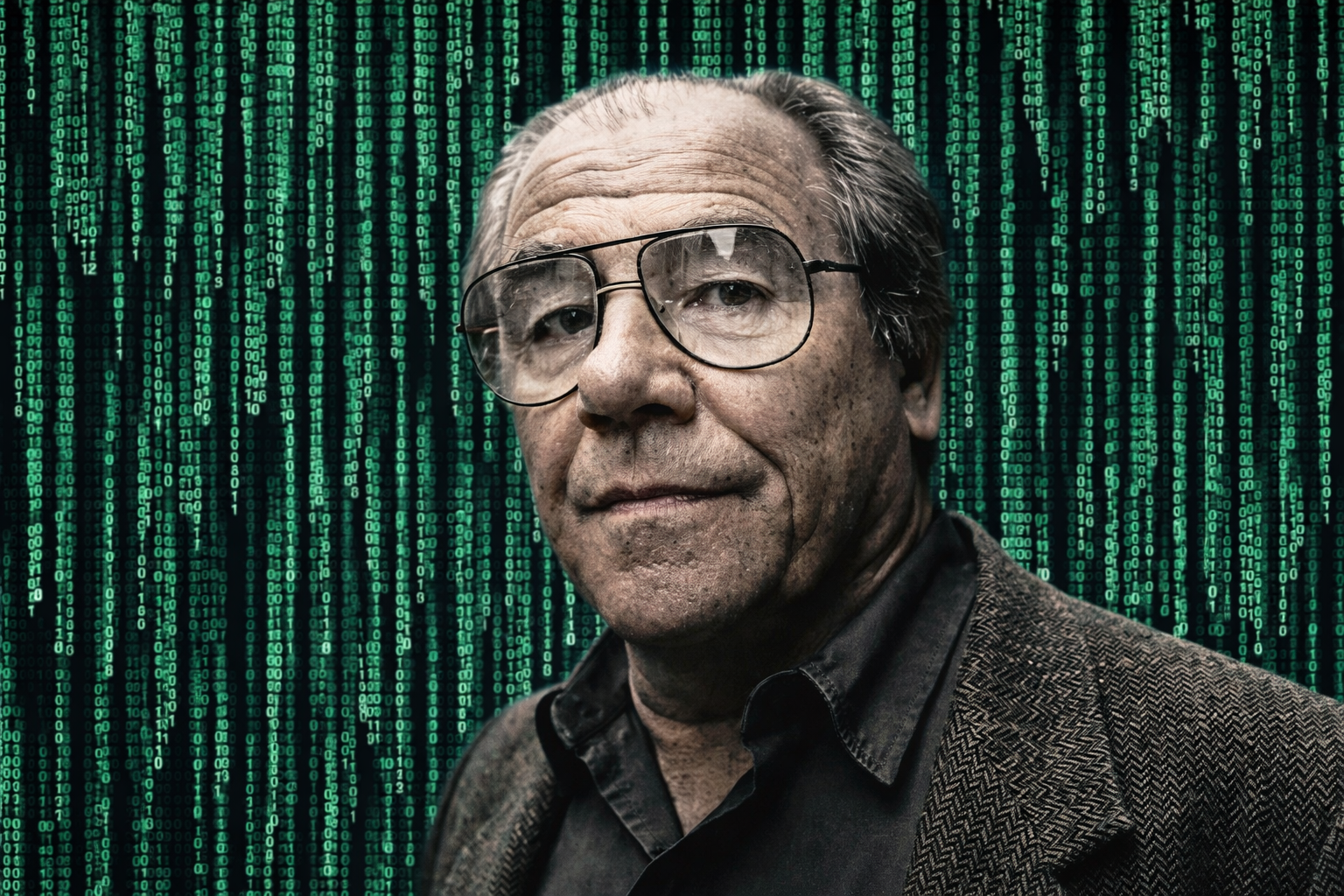
This is also why Baudrillard was never fully represented by The Matrix, even if the film drew heavily from his ideas. The Matrix still preserves a clean distinction between illusion and reality, between the false world and the true one. Baudrillard’s argument is more radical. For him, the real and the simulated do not remain neatly separated. They become increasingly indistinguishable, until the simulation no longer hides reality but replaces it.
What makes Baudrillard important today is that he anticipated a world in which digital representation would become socially stronger than physical presence. A profile can outweigh a person. A narrative can outweigh an event. A map can outweigh the territory. In such a world, truth is not merely concealed. It becomes difficult to locate at all, because the mechanisms of simulation are embedded in everyday life.
Baudrillard matters, then, because he gives us a vocabulary for understanding a world that increasingly feels unreal without being fictional. He explains why signs dominate substance, why representation overtakes reality, and why modern life often feels like a copy without an original. He remains essential because the world he described is no longer emerging. It is already here.
Leave a Reply