
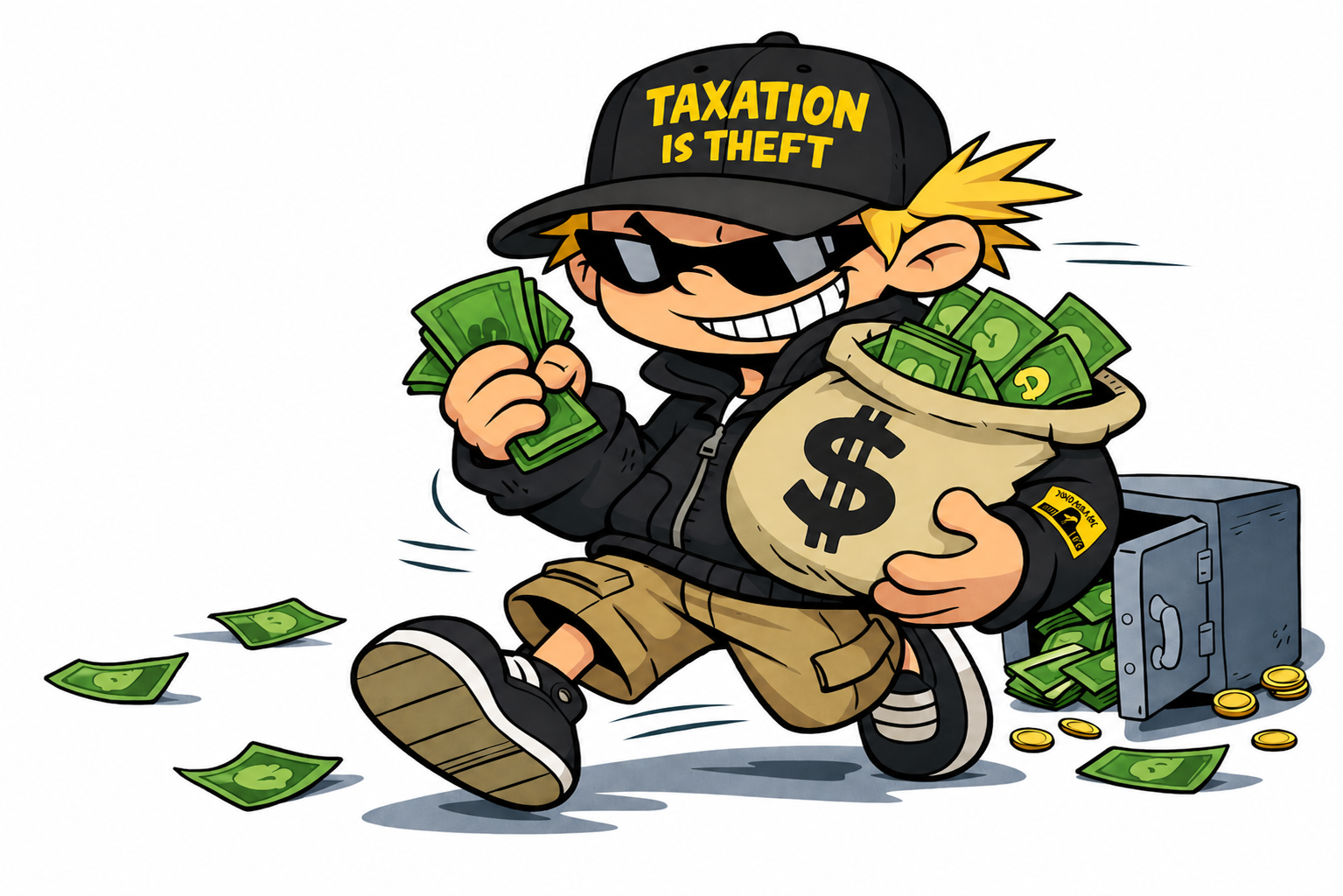
Taxertarian
/ˌtæk.sərˈtɛr.i.ən/
noun (derogatory, satirical)
Definition:
A self-described libertarian who nonetheless supports taxation—thereby holding a position fundamentally incompatible with libertarianism’s core principle that taxation is theft and that all taxes should ultimately be abolished.
Description:
A Taxertarian typically attempts to reconcile libertarian rhetoric with pro-tax positions by selectively redefining coercion, downplaying the non-consensual nature of taxation, or carving out “exceptional” taxes deemed acceptable. This often includes support for schemes such as Land Value Tax (LVT) or other “single tax” frameworks, framed as efficient, minimal, or less bad rather than outright coercive.
Motivations (commonly attributed):
- Ideological cowardice: unwillingness to follow libertarian principles to their logical conclusions.
- Normie-appealism: softening radical positions to appear reasonable, mainstream, or politically viable.
- State-adjacent comfort: preference for familiar institutions over genuine market alternatives.
- Moral hedging: treating theft as acceptable when rebranded as “necessary” or “optimal.”
Usage:
“If you believe the state may legitimately tax people, you’re not a libertarian—you’re a Taxertarian.”
Contrast:
- Libertarian: Opposes all forms of coercive taxation; views the state as an aggressor.
- Minarchist: Advocates a minimal state but still contradicts libertarian ethics on taxation.
- Taxertarian: Uses libertarian aesthetics while retaining tax-based premises.
Synonyms (informal):
- Fiscal statist in libertarian cosplay
- Soft-state libertarian
- Libertarian-ish
Antonym:
- Consistent libertarian
- Anarcho-capitalist
Notes:
The term is typically used polemically to highlight internal contradictions and to mock attempts at branding coercion as liberty-compatible.
Leave a Reply