
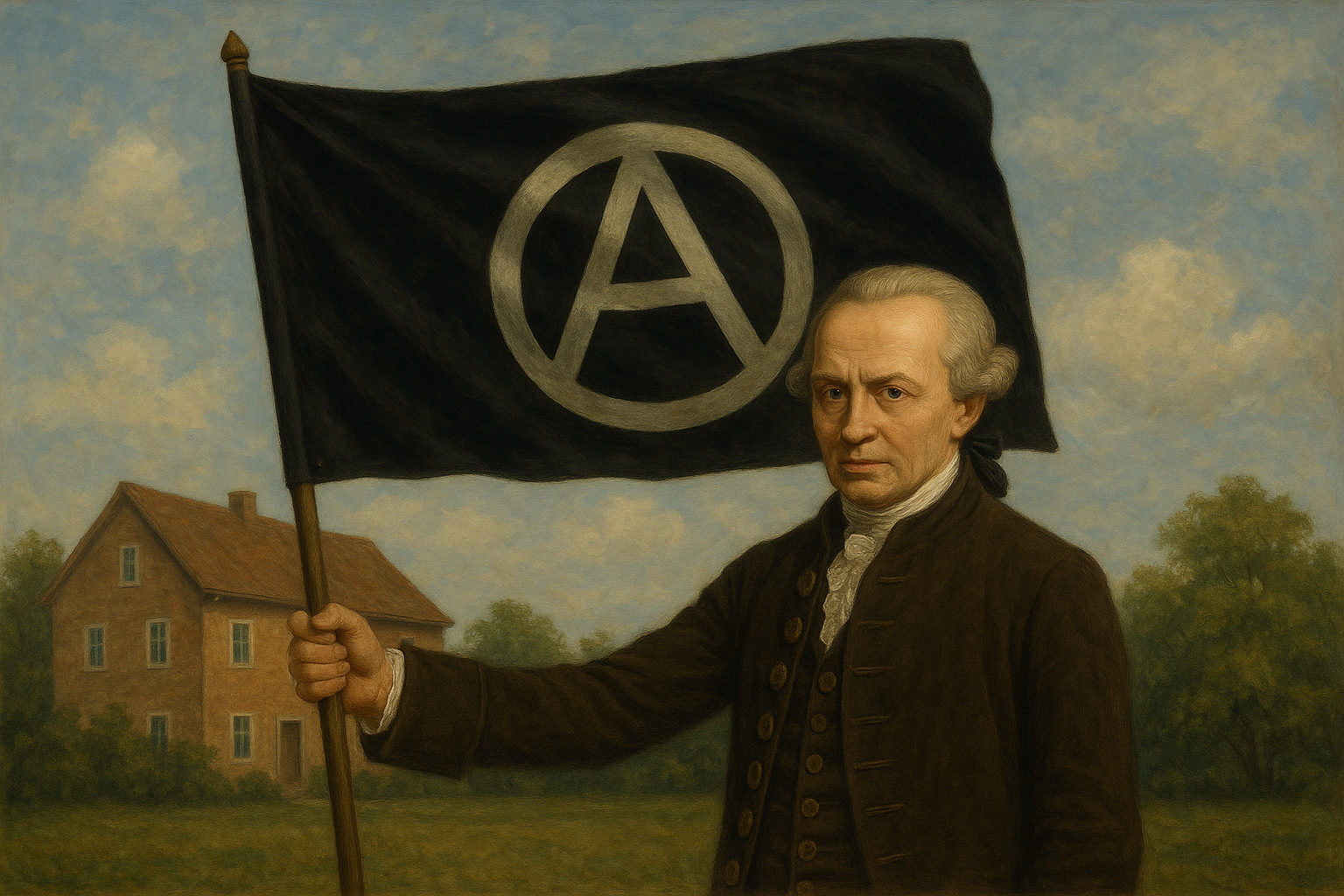
Property rights are not a social convenience or a negotiable preference. They are a categorically imperative foundation for any moral and functional human society. When individuals are free to own, create, trade, and defend the fruits of their labor, social cooperation becomes possible. When property rights collapse, so does trust, creativity, and the possibility of peaceful exchange.
The principle is simple. If your body is yours, then the products of your effort follow as an extension of that sovereignty. This is why property is not merely economic. It is ethical. It expresses the core truth that individuals are ends in themselves, not instruments for collective use.
This applies even to the act of trespassing. Many argue that trespassing is acceptable in the name of emergency or salvation. The problem is that once exceptions are allowed, the concept of property becomes elastic. If one can enter your land because the situation feels justified, then where does that chain of exceptions end. How many justifications will society invent, and how quickly will they become tools for abuse. A right that can be suspended at will is not a right at all.
Every violation of property rights, including taxation, expropriation, censorship, arbitrary regulation, and even well intentioned trespass, sends the message that the individual is subordinate to an external will. In contrast, strong and inviolable property rights affirm that each person has the authority to shape their own destiny through peaceful action.
In this sense, property rights are not optional, contractual, or pragmatic. They are the moral grammar that makes liberty intelligible. Without them, no law, no market, and no society can endure.
Leave a Reply